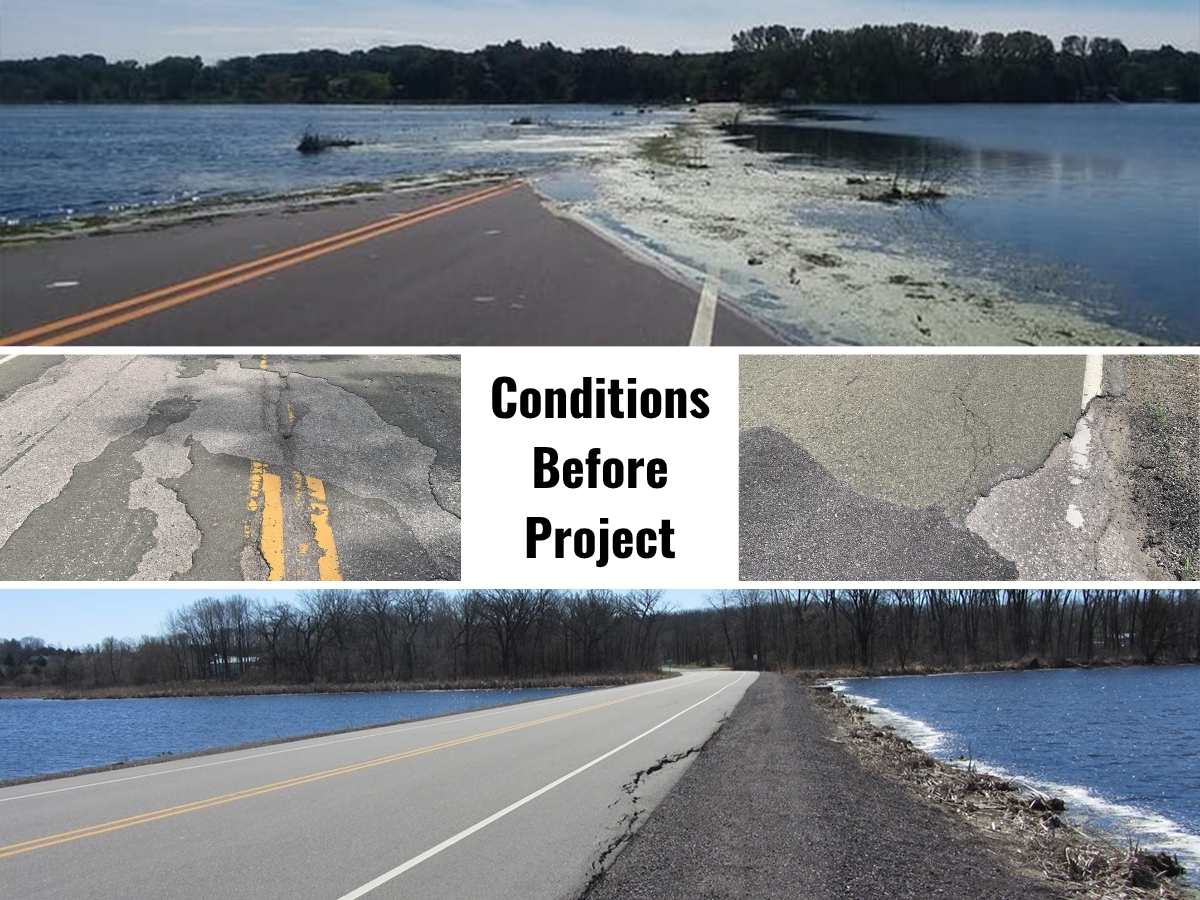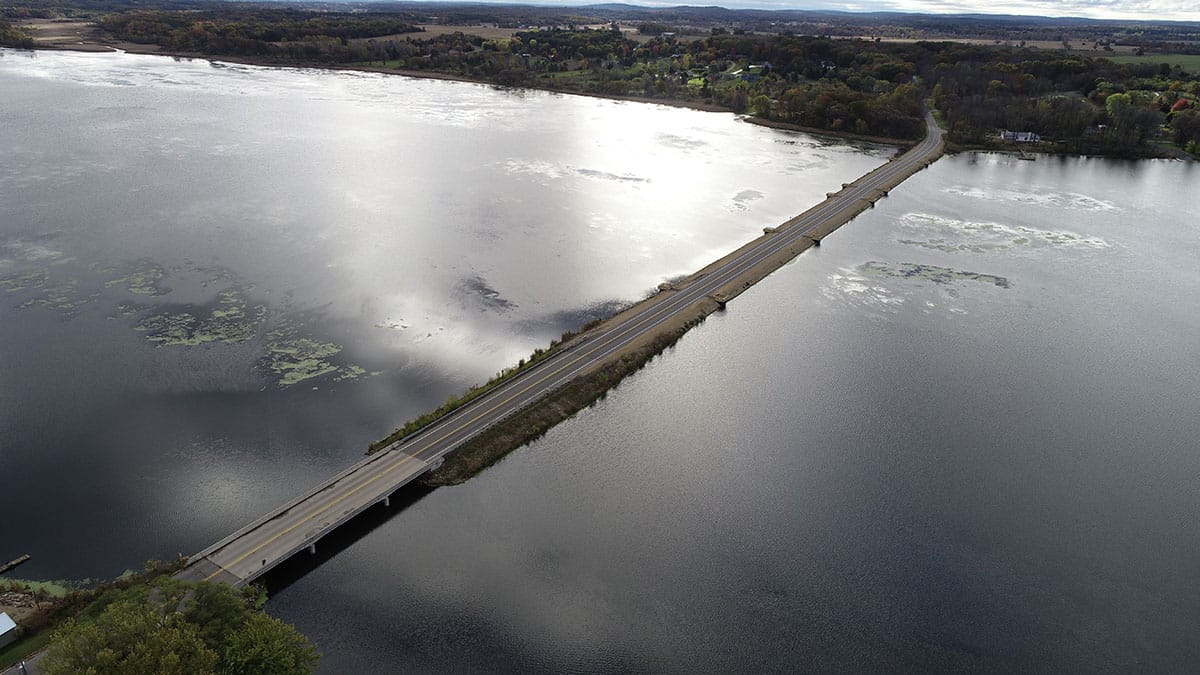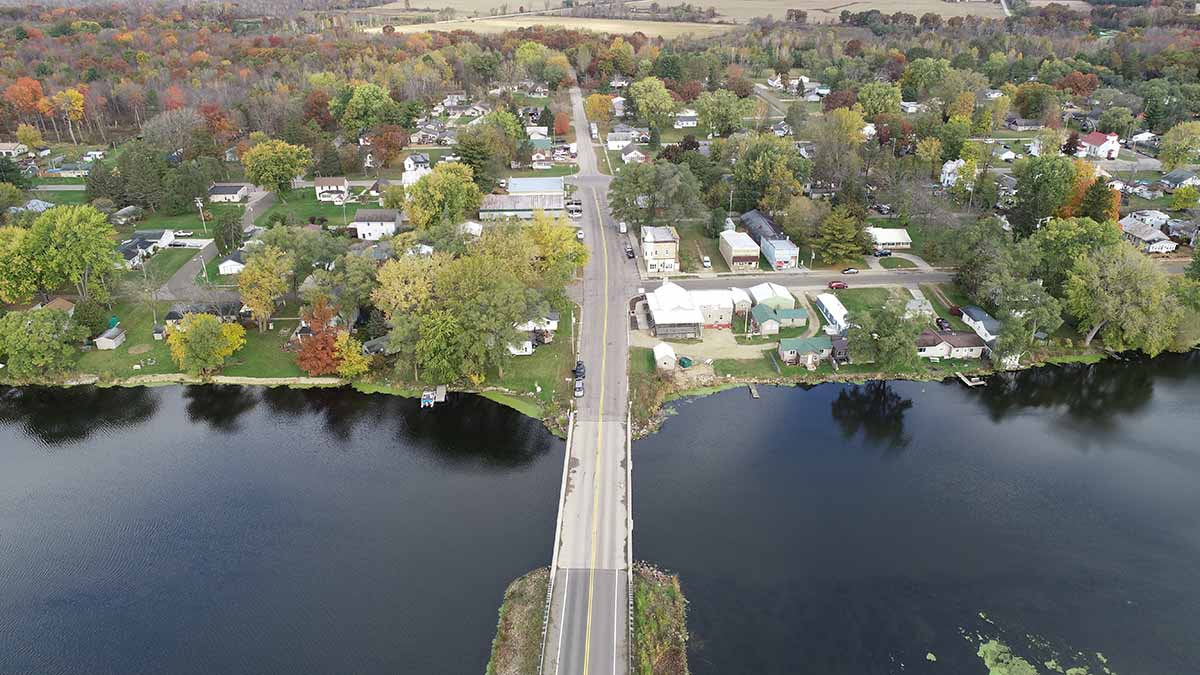
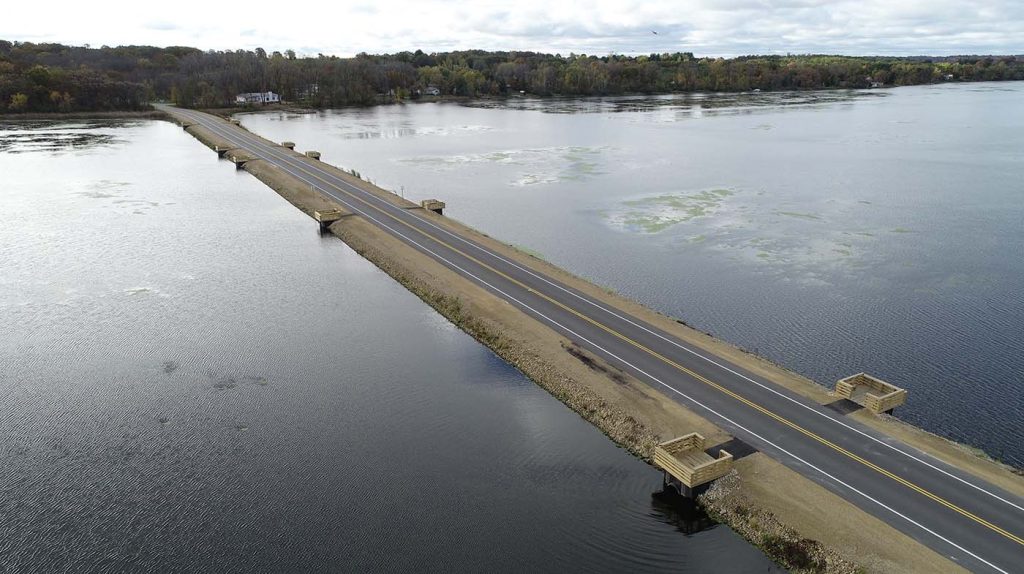
For decades, the CTH D causeway across Buffalo Lake was a weak link in Marquette County’s transportation network. Frequent flooding shut down this critical corridor, forcing hour-long detours and delaying emergency response, school transportation, and daily travel. Previous repairs failed to solve the problem, leaving the community without a reliable solution.
KL Engineering partnered with Marquette County to rethink what was possible.
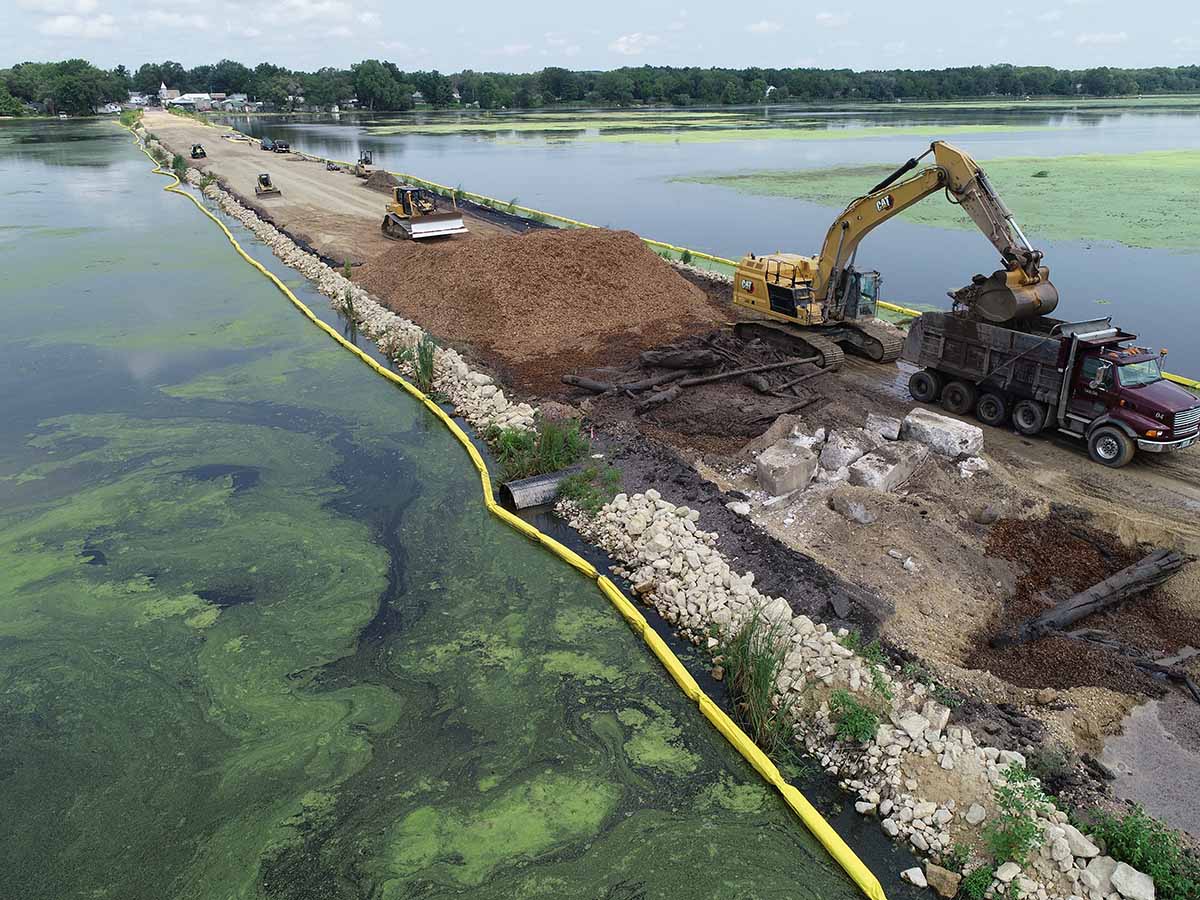
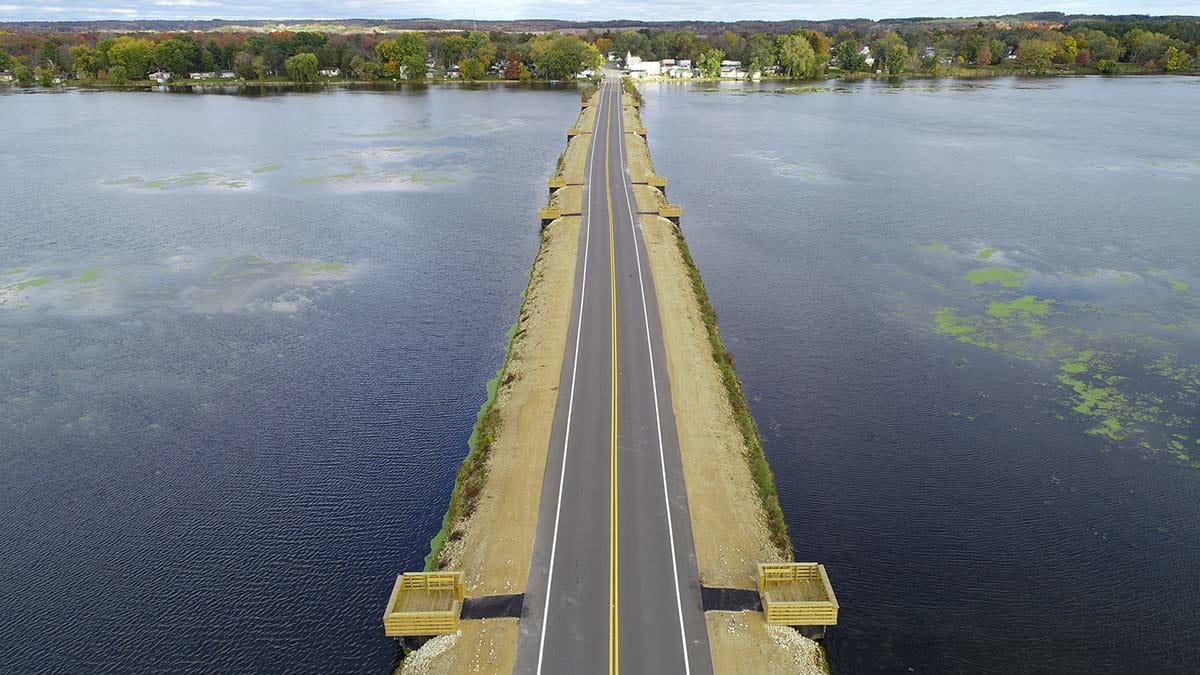
Rather than applying another short-term fix, the team delivered a long-term, resilient reconstruction that transformed the causeway into a dependable, year-round connection. The new design raised the roadway above historic flood levels, stabilized extremely poor underlying soils, and restored safe, consistent access for residents, businesses, and emergency services.
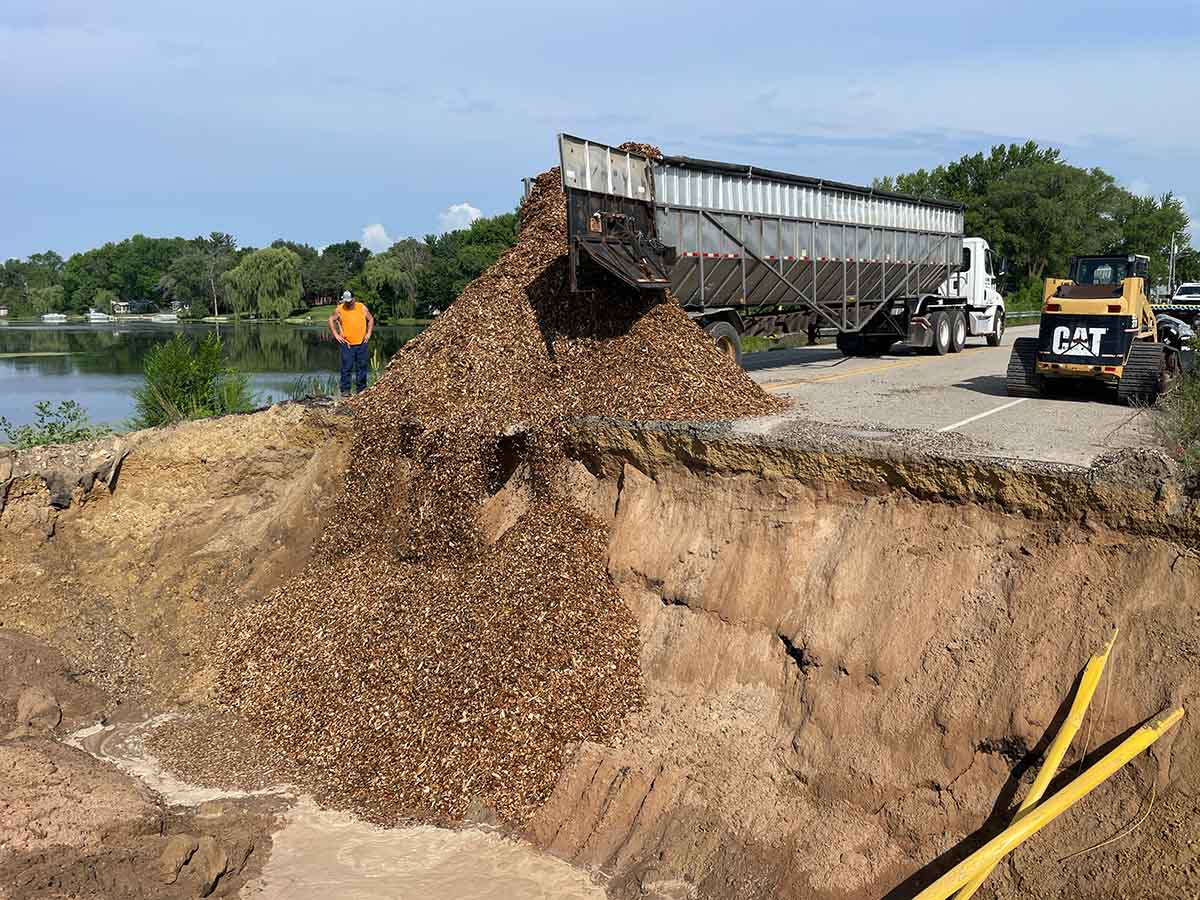
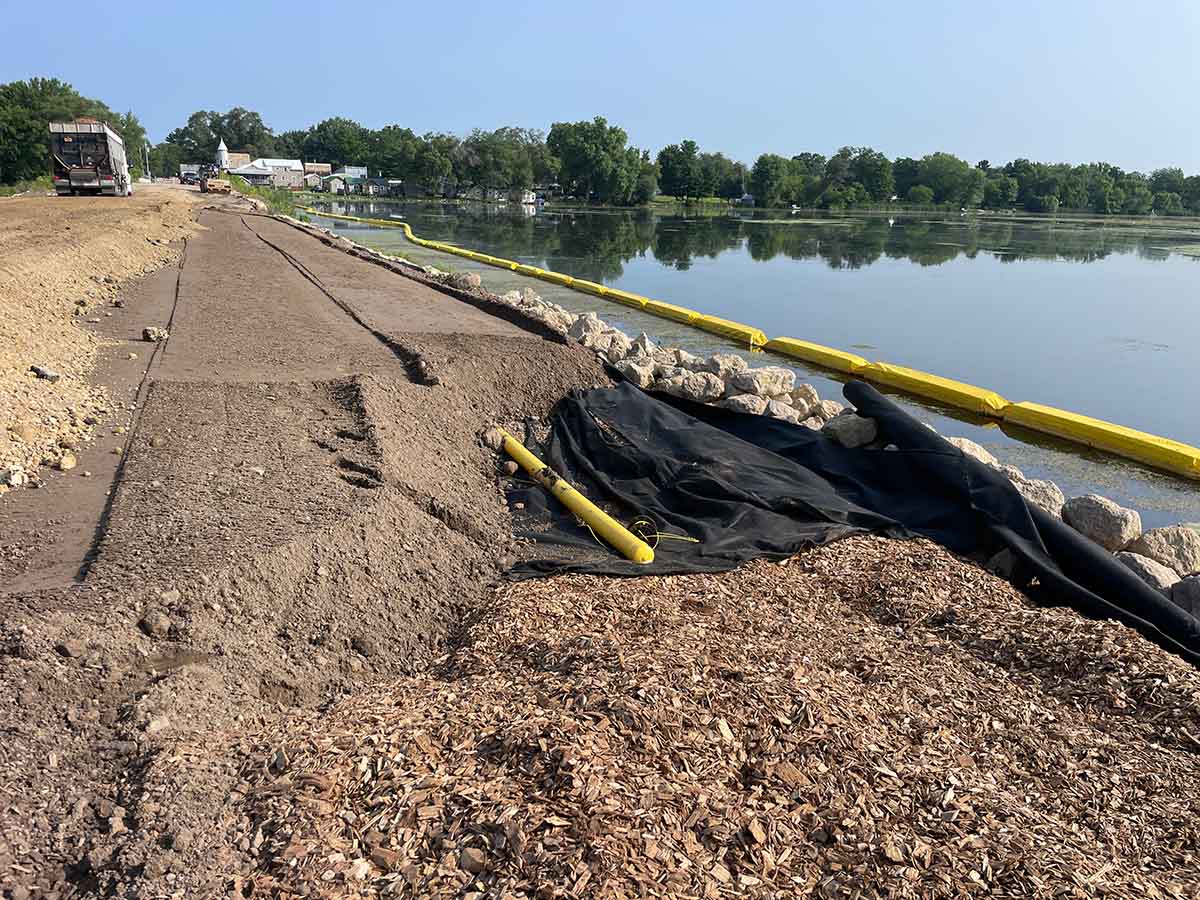
At the heart of the project is a bold, first-of-its-kind solution in Wisconsin: the use of wood chips as lightweight fill to support the roadway. Traditional materials would have caused excessive settlement or exceeded the County’s budget. By leveraging research and collaborating with geotechnical specialists, the team implemented an innovative approach that balanced performance, constructability, and cost.
More than 24,000 cubic yards of locally sourced wood chips were placed to create a stable foundation where conventional methods would have failed. This approach not only solved a complex geotechnical challenge, but also reduced environmental impact and introduced a new, sustainable option for future infrastructure projects across the region.
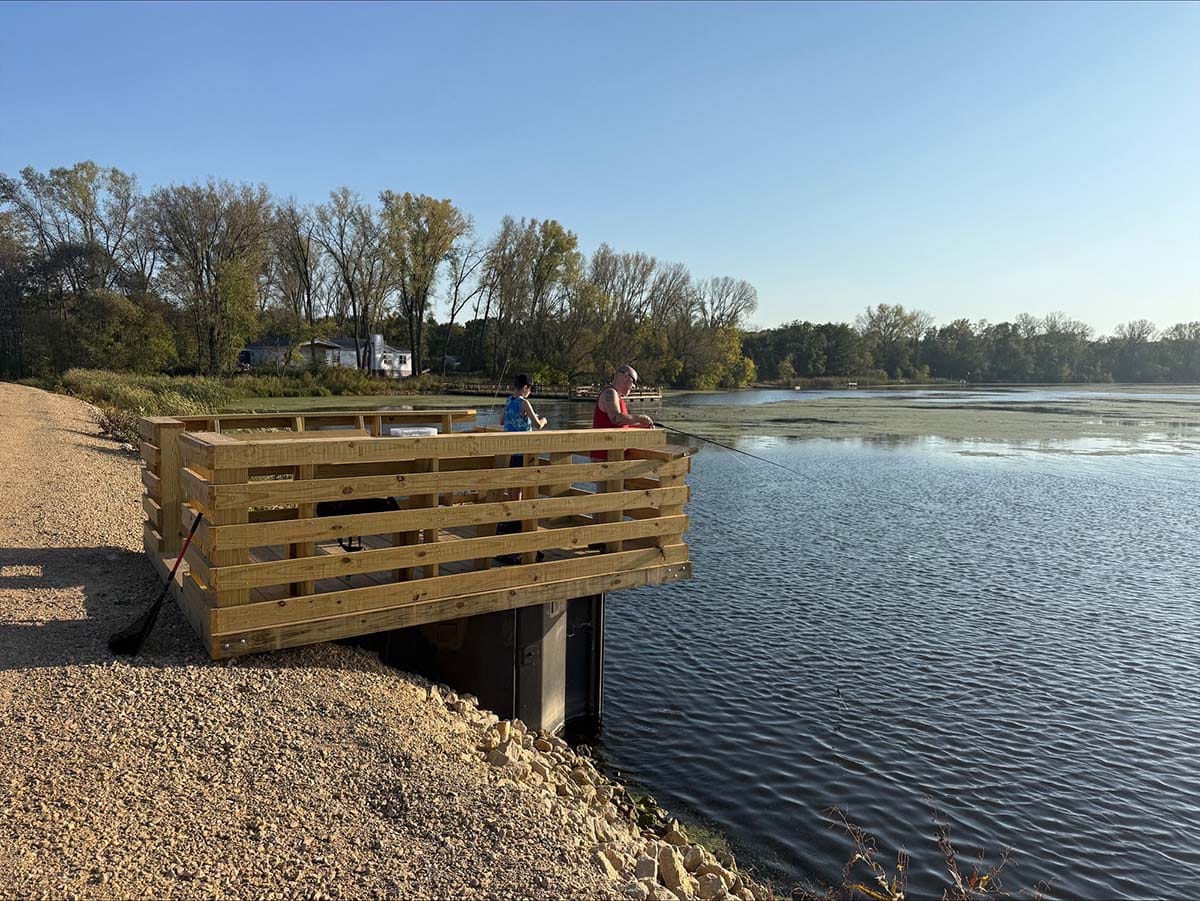
Beyond restoring reliability, the project enhances the community experience. ADA-accessible fishing platforms, improved bicycle accommodations, and safer shoulders transform the causeway into a destination that supports recreation and tourism while maintaining its critical transportation role.
Delivered within a tight construction window and without cost-related change orders, the project stands as a model of collaboration, innovation, and practical problem-solving. What was once a recurring disruption is now a resilient, community-focused asset that reconnects people to opportunity, safety, and everyday life.